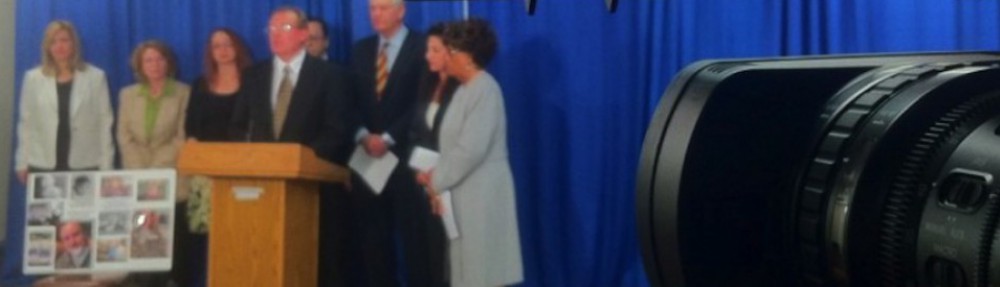

A few weeks ago the Washington Post published an article about my documentary, WHAT KILLED KEVIN, about the pivotal story that put workplace bullying on the map. Shortly after it was amended to include unsubstantiated information. BUT, in a highly unusual move the Washington Post editors restored the article to original form. That gives all the more weight to the fact that the Washington Post is standing behind their article about Romney’s high school actions: Continue reading
Category Archives: Uncategorized
Building a Tool Box for Victims of Workplace Bullying
Are victim/targets really always powerless?
According to leading researchers Pamela Lutgen-Sandvik and Sarah J Tracy “…Prior research typically characterizes targeted workers as powerless, as the term target might suggest. However, Lutgen-Sandvik (2006), Cowan (2009a), and Meares et al. (2004) all suggest that targeted workers resist bullying in many ingenious ways. These studies demonstrate the social processes involved in resistance as well as the forms of resistance most likely to result in providing relief from abuse. Taken together we see that communication scholars reconsider and critique the notion of the “powerless” target that heretofore has dominated workplace bullying research…” Continue reading
Nurse Jackie and the Workplace Bully – or is he?
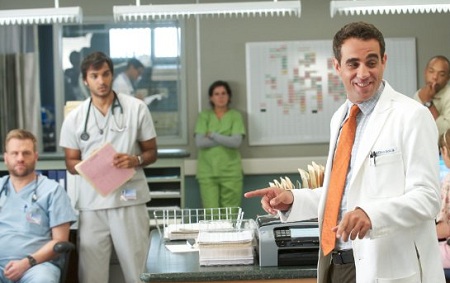
Last night I caught an episode of Nurse Jackie. Paramedics quickly wheel a pregnant woman into the ER. Dr Cruz, the newest member of the team who also happens to be in charge of everyone, tells a very pregnant Dr. O’Hara to step aside so he can take control. It’s clear to viewers that Dr Cruz has falsely assumed he needs to protect a very pregnant, and therefore very weak, Dr. Ohara from an emotionally trying situation. Continue reading
Daring to Fault the Bully Label: Making WHAT KILLED KEVIN
[This article was published in May 2012. See our recent posts below]
Two weeks ago, the Washington Post published an article, “Documentary faults ‘bully’ label in U-Va. suicide,” about my film, WHAT KILLED KEVIN. Shortly after the reporter amended the actual article to include allegations from Waldo Jaquith, who is featured in the documentary, that I had “cherry picked” my interview with him to fit my “agenda.” [Note: Jaquith has never seen the film and you can see his video clip and my agenda below] In an unusual move the editors of the Washington Post have since removed all of his allegations and restored the article to its original form with a notice at the top apologizing for their editorial “lapse.” Why the controversy? My film dares to take a neutral stance in exploring the incident that put the term “workplace bullying” on the map by allowing the alleged bully to tell their side of the story. Within weeks of Kevin Morrissey’s suicide, Waldo was featured in a report by the Today Show that linked Kevin’s death to actions by his “bully boss,” Ted Genoways. As the WaPo states: “eventually the case was embraced as a textbook example of a manager’s verbal and psychological abuse of an employee. That reading is far too simple, argues Beverly Peterson… The film ultimately portrays Genoways as a victim — of overhyped reporting, and of exploitation by advocates of workplace-bullying legislation, who have used the case as a national exemplar.
Ted Genoways on Leaving VQR
Shortly after his death, Kevin Morrissey became the “poster child” for advocates of the Workplace Bullying Institute’s Healthy Workplace Bill. So, it’s curious to see how unusually quiet they’ve been about the announcement of Ted Genoways’ resignation from VQR. In less than a week the news of Ted’s resignation generated roughly 20 google pages of articles.
Cultural differences in workplaces…
I was up early this morning using the web to research a topic when I happened to find this Korean article advising Korean workers how to understand the style of their Americans and Europeans co-workers. I met a Korean workplace bullying expert/researcher while I was filming at the 2008 International Conference on Workplace Bullying & Harassment. She said that they were having difficulty developing a way to gauge harassment because the cultural differences were so great. This article gives some insight into what she meant… Continue reading