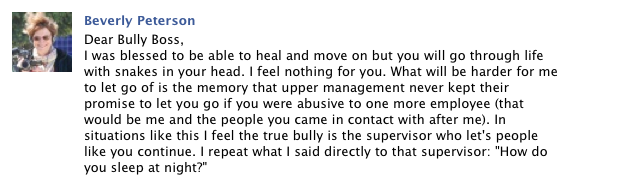
“Dear Bully Boss”

I moderate a Facebook Group and something special is happening there.  Last night I came home to find that several people had spontaneously posted “Dear Bully Boss” letters.   I couldn’t help adding my own.  It’s been cathartic for many of us.  Here’s a sampling…  [ names withheld for this posting but you can visit the group and add your own by clicking here]

Dear Bully Boss: I asked you repeatedly in a very nice way (at first) to please intervene when co-workers were making insulting comments directed at me, talking over me, excluding me and ignoring me when I asked for a cooperative and respectful workplace. If you had acted when I first approached you there would have been very few hard feelings and more than likely we all could have worked as a team..

Dear Bully Boss: F_ You! That’s all I can say. Oh, and another thing… “Karma” will come your way. It always does!

Dear BullyBoss: You insulted me, you talked about me behind my back, you underminded me, you made up lies about me, you talked AT me instead of TO me. You treated me like shit and then tossed me aside like I never mattered. It will take a long time for me to heal from your abuse but at least I know I will get better. YOU NEVER WILL.

Dear Bully Boss: I was not successfull in giving you my soul and all that you expected of me; however, I was able to succeed in giving you what you asked for. Sorry for the inconveniances this may have caused you. Pffft. ya right.!.!

Dear Bully Boss: It is obvious just how deeply entrenched in sand, denial, and do-goodery you are. You know EXACTLY what you did to me and others, as do your secretive and manipulative BOD chairs, and your spineless remaining staff. No one can lie that much and not be aware of it on some level — well, except for the absolute sickest of narcissistic sociopaths…

Add Your Own “Dear Bully Boss” Letter…

The Final Chapter: Tracey’s Law Against Workplace Bullying

Why Tracey’s Story Is So Important:

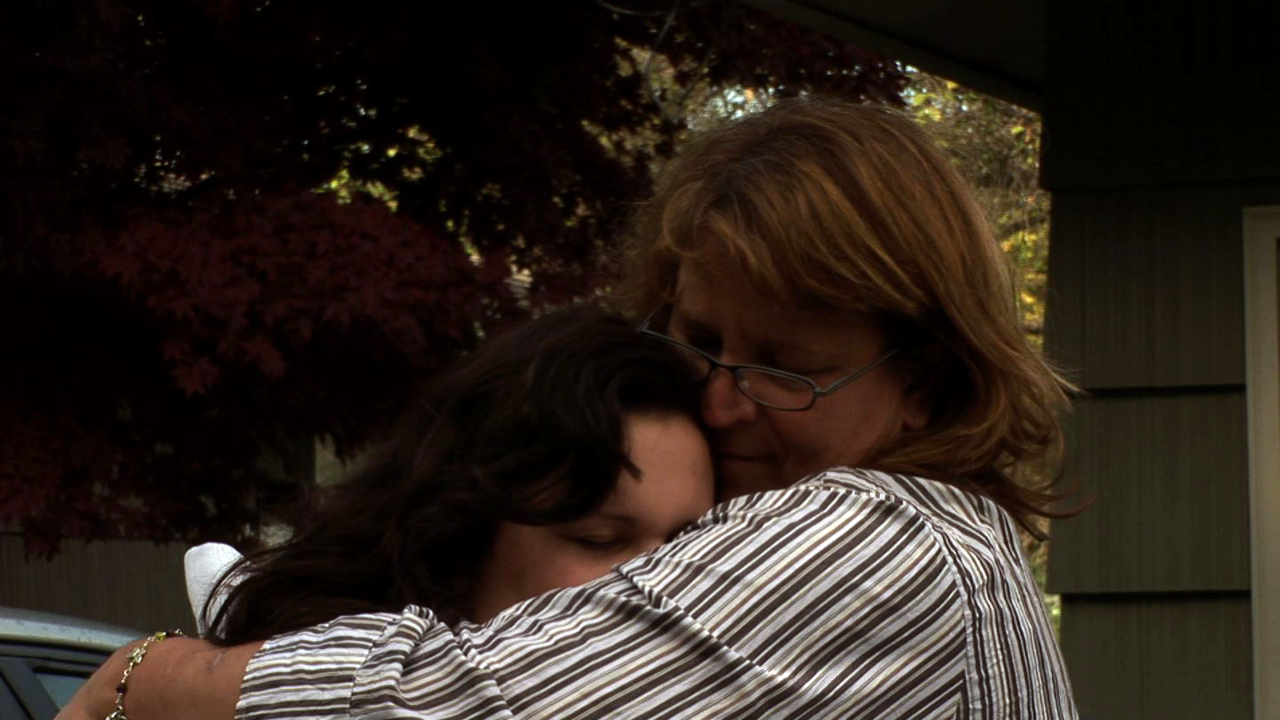
To me, Tracey’s story shows how complicated the answer is to the first question that victims are always asked: “if you don’t like it there why don’t you just get another job?”  Personally, I began making films about workplace bullying because I was smack in the middle of my own office drama.  I was attracted to Tracey’s story because she was about to go on a journey that represented my worst fears.   I needed to find bully free work but I was terrified what would happen if I didn’t land one of the 2 open jobs I was qualified for in the Metro NYC area — where my husband is employed, our careers are based, and our friends and family live.   I knew I was extremely lucky to land one.  Part of the short documentary I made about Tracey’s situation included scenes of her daughter, Kali, lobbying for legislation while her mom was traveling around the Carolinas and Georgia looking for a job.  It’s been nearly over 3 years since I filmed that deeply moving scene with Kali yet still no legislation has passed.

Q: Why do you think that the HWB hasn’t passed yet?

Tracey: Why do I think there has not been a HWB passed yet is a tough question to a tougher answer. Personally, I do not like the bill to begin with. I believe it is too corporate friendly in that there is no really big reason for corporates to embrace a law that has very small consequences. Having a cap on the claim a target can obtain is ludicrious. My real belief though is that there continues to be a blindfold on this real issue to our senators and congress men and women.  While some have been very supportive, others don’t.  I find this rather silly when I sit and listen to how the parties behave in the senate and treat each other. They are bullies!  I don’t really know why the bill hasn’t passed but I’d sure like to hear other’s opinions on it.

Q:  Is there anything you would particularly like to add…

Tracey: I want to thank everybody who have worked tirelessly at getting a HWB passed. I know that many of you have suffered personally due to tragedies that happen in the workplace. My heart is with you. I hope that one day I might feel better to re-join you but in the meanwhile, know that my heart is with you all and I am so grateful for all your work.

Tracey’s Law is featured on our “Virtual Town Hall” page or can be accessed for free on both YOUTUBE & Vimeo.

UPDATE! “Tracey’s Law” Against Workplace Bullying Pt. 1 of 3

Q: It’s actually been several years (close to 4?) since I first came up to meet and film with you.  At that time you were moving South to try to find work. People who have seen TRACEY’S LAW have been deeply moved by your story and I was wondering if you could tell us what your situation is now?

Tracey: When I left [upstate NY] 5 years ago for North Carolina to find work, I was very excited about starting a new life in a new area. I had always loved NC and had family living there as well so I had no doubts that everything would work out. I was so wrong. My timing could not have been worse. The economy had just hit its first traces of the recession and jobs in NC were not as plentiful as it had always been. I sent out 100’s of resumes and met with dozens of agencies and was unsuccessful in finding work. I had the skills but there were no jobs.

After six months of seeking employment there, I moved down to the Atlanta, GA area where I had more family. For six months I looked for a job there and it seemed the job market was even worse there than it was in NC. I finally gave up and returned to my own family in [upstate NY], feeling like quite a failure.  My family was very welcoming as I had expected and I immediately picked up some temporary positions that I was overly qualified for but grateful to accept.

Once those dried out I interviewed at a retail chain and have been there for nearly 3 years. It has been an eye opener in the different workplaces I have been in to see that workplace bullying is so common and occurs in so many forms; primarily, however, in the form of psychological bullying which is so hard to prove. Documenting psychological harrasment is difficult because it happens behind closed doors most of the time. People are afraid to speak out because they are afraid for their jobs. I have worked with several people who were currently being psychologically abused in the workplace and they were miserable and afraid – which led to them making silly mistakes in their jobs and giving their bully even more ammunition to use against them.

I, too, took over a temp positon that others in the department called “the dart board”. Wow. So others in executive level positions could see what was happening to the person in this role and they too were silent about it. In this position I was cursed at and yelled at and told I was not good enough for the position as a full time permanent.  At another time, the same person told me I was over-qualified for it.  One thing that did change, however, I didn’t take the abuse sitting down and faced it head on when it happened.  I was in charge of how people were going to talk to me and if they didn’t like it, it was just a temp job anyhow.  Currently working at [name withheld], I see mostly age discrimination.  Being 52 years old, I am supervised by executives more than half my age who know a fourth of what I know about managing people. They call each other and sales floor employees names, but I don’t forget to tell them how unprofessional it is and that seems to be all it takes.  At least it doesn’t happen around me. I continue to be depressed and have times when I feel post traumatically stressed. I have migraines that last for days.

In March of 2011 I was awarded social security disability benefits retroactive two years. I am now on disability but continue to work about 20 hours a week. I went from being a successful single mother who owned my own home and had a career that paid me 56K/yr to a person on disability working [retail], and filing a 2010 income tax of just over 9K! I live with my mother and my daughter.

Since the documentary was made, my mother had an addition added on the house and I have a beautiful bedroom with a private sitting area for my own privacy.  I have been to my State Capitol to testify and lobby for a workplace bullying law, but have decided it stirs up my emotions too much and I feel helpless in getting a bill passed.


HR Response to Mental Health in the Workplace

Suzanne V. Benoit,  LCSW, SPHR often writes about toxic employees and workplace bullying.  She reveals a personal side in her recent post addressing Carol Kilner’s article Responding to Mental Illness in Your Workforce: Leading a Culture Change [PsychCentral].  I tweeted her right away for permission to repost:

HR Response to Mental Health in the Workplace

by Suzanne V. Benoit

A unique perspective

I came to the practice of HR from a business background and then Clinical Social Work. My views on mental illness and HR arise from a very different place than my HR peers mostly because of my exposure to severe and chronic mental illness. The sigma Ms. Kivler discusses is very powerful indeed. Because of my experience, I am not afraid of individuals with mental illness. I know that these are fellow human beings with a variety of personal values and styles. I know that only a very small percentage of people with mental illness are violent. It’s just that when a person with mental illness commits a violent crime, the media, especially fringe media, bombard the general public with disturbing images and sensationalized information. I also know that most mental health issues in the workplace are mood disorders such as depression and bipolar disorders which respond well to medical intervention.

Finally, I know that the mentally ill were not all raised in chaotic or abusive homes. I was raised in a lovely family by good parents (not perfect, but good enough) and had a brother who suffered from bipolar mood swings and psychoses from the age of 20 until his death at 48. The voices he heard told him that he, and not others around him, were bad. I know first hand that the essence of who he was as a person, was not the paranoid, odd behavior and religiosity my brother expressed, but it was the sweet, creative and sensitive individual who worked part-time while well on medication. He would never have harmed anyone.

The American workplace is in need of good information like the tips covered in Ms. Kivler’s article, particularly making information on mental health a part of wellness programs. If only employers could take this information and adopt it freely. I think it is possible but HIPAA presents a psychological and legal barrier to some of the actions suggested in the article. The discipline of HR tends to be generally risk averse. It doesnt’ make them mean or uncaring, just cautious. Let me explain this.

HR is naturally cautious

Employers are responsible for removing the appearance or fact of ADA discrimination. In addition, employers are required to protect the privacy of employee personal health information. To do this perfectly, employers would never want to know if someone has a mental illness. Once you know, you are open to accusations of misusing it in order to keep people from promotions or other employment opportunities. For this reason, medical benefits information or other employee-employer correspondence regarding the diagnosis of mental illness are kept in separate “medical files” and not in the personnel file to which supervisor’s have regular access. Employers must also try to prevent this information from being casually released and discussed amongst co-workers. As such, they may ask employees to refrain from discussing their conditions with their peers.

What is the right balance?

I believe that the answer is to emphasize compassion and inclusion a bit and loosen the mentality of “eliminating” risk to more a risk management posture. Ms. Kivler’s article is timely because presenteeism is an emerging HR issue. It’s like absenteeism in that productivity is negatively impacted. However in presenteeism, the employee is at work but distracted by stress and other matters. Mental illness appears to be one of the growing reasons for this distraction. I would conduct training as Ms. Kivler suggests – fold this into the wellness program. I would make sure that the HR department is a safe and informed place for any employee to go if he/she needed support for time off or accessing counseling benefits. This requires that HR staff be held to a high standard of listening, seeing this in the same nonjudmental way that they see say, diabetes, and well versed in the ways in which mental illness can affect employee performance.

I would make sure my performance evaluation system focuses strictly on what and how the employee performs the essential functions of the job and NOT extraneous and irrelevant information like: age, race or disability. I would encourage the company to sensitively approach employees whose performance seems to be impaired by a personal issue in the same way whether it is divorce, an ill relative or their own mental illness. I would ensure that these individuals receive referrals for EAP or mental health counseling. And finally, I would ensure that my HR staff are comfortable responding lawfully and respectfully to requests for accommodations for a bona fide disability whether it represents a physical or mental impairment.

Staff training and stereotypes

Part of the role of sexual harassment statutes is to prevent harassment in the workplace. The practical effect however, is staff training and development. Employers are comfortable conducting training about how employees should behave when they encounter harassment in the workplace. This means no sexual innuendo jokes, slang, etc. Ms. Kivler suggests that use of the word “mental” should be more comfortable (I agree 100%). I would add that we could also support employees to be more sensitive about comments that could be harmful: crazy, loony or even worse “lazy” as applied to those suffering from depression when they can’t get out of bed.

I am grateful to Carol A. Kivler for writing about this topic. It is timely and very important. I also look forward to @psychcentral’s thoughtful tweets each day on topics of individual mental health.

About Suzanne V. Benoit

Suzanne V. Benoit, LCSW, SPHR is a human resource consultant and author providing strategies to improve workplace culture and quality business outcomes. Striving for corporate excellence means a no-compromise posture on workplace abuse and intimidation as well as creating supporting structures that reward candor, respect and accountability. Her book: “Toxic Employees: great companies resolve this problem, you can too!” provides details about the source, motives and tactics used by toxic employees and is used by managers struggling to shift negative dynamics in the workplace. Suzanne’s workshops on principled approaches to workplace challenges are “both entertaining and valuable” including tools for attendees’ immediate use. To contact Ms. Benoit can be please visit www.benoitconsulting.com.

 

Employees who don’t report workplace abuse are more likely to resolve it…

Workplace Bullying And The Things We May Control

When I was still being bullied at work I did speak up to management and the response was so frustrating that it wasn’t hard to conjure up fantasies of purposely making mistakes or other similar actions.  My older sister, who became my best mentor, counseled me repeatedly not to give in to these desires.  Instead she argued for what she calls the “Girl Scout Approach” [GSA].   Always there ready to slog through any job issue no matter how repetitive, unnecessary, demeaning or delusional.   Personally I draw the line at giving anyone a cookie when they are systematically trying to destroy me.  While this tactic did not prevent the devastating impact on my health or finances, I did survive with my resume intact and actually won in the end.  In no small part because I was able to remain a positive team player able to attract and build a support system of co-workers.  Wayne Hochwarter, a Professor at Florida State University,  conducted research that found that employees who remain silent about abuse were “three times more likely to proactively fix problems, including perceived abuse, than those who reported mistreatment.”   That’s a startling finding:

  • Thirty percent of those who reported abuse slowed down or purposely made errors, compared with 6 percent of those not reporting abuse.
  • Twenty-seven percent of those who reported abuse purposely hid from the boss, compared with 4 percent of those not reporting abuse.
  • Thirty-three percent of those who reported abuse confessed to not putting in maximum effort, compared with 9 percent of those not reporting abuse.
  • Twenty-nine percent of those who reported abuse took sick time off even when not ill, compared with 5 percent of those not reporting abuse.
  • Twenty-five percent of those who reported abuse took more or longer breaks, compared with 7 percent of those not reporting abuse.

Changing Our Work Environments

So, if you’ve reported to HR or your superiors that your boss is a bully and the investigation is going nowhere – if it’s happening at all – and you find yourself in your work cubicle plotting passive/aggressive revenge you definitely aren’t alone.  But, it’s just as easy to imagine that acting out these fantasies can wreak havoc on careers and resumes.  This month Channel 10 in Tampa reported that while findings indicate that our workplaces have become more toxic “Professor Hochwarter does see hope for the employee-boss relationship.”

An improving economy could shift expectations for employees from daily benchmarks to yearly output, and that, he says, could help make horrible bosses a little more human.”

Hochwarter is hopeful that creating a work environment that fosters “civility” and “a commitment to active communication, may cure many of these problems.”   It would be interesting to see how the types of behavior above are reflected in the responses and actions of HR, Arbitration, Mediation, and  Ombudsman services in their attempts to resolve these types of issues.

Are you a “bully boss”?

While researching my documentary on Workplace Bullying, I have often heard people say that it’s impossible to know whether or not a boss is actually a bully or just a tough manager.   The definition and list of examples is often so vague and all encompassing that it’s really not unusual for this to be followed by something like, I mean I have to manage people and I suppose I could be considered a bully boss.  Which, I suspect, gets to the root of the problem.  Continue reading