Building a Tool Box for Victims of Workplace Bullying

Are victim/targets really always powerless?

According to leading researchers Pamela Lutgen-Sandvik and  Sarah J Tracy “…Prior research typically characterizes targeted workers as powerless, as the term target might suggest. However, Lutgen-Sandvik (2006), Cowan (2009a), and Meares et al. (2004) all suggest that targeted workers resist bullying in many ingenious ways. These studies demonstrate the social processes involved in resistance as well as the forms of resistance most likely to result in providing relief from abuse. Taken together we see that communication scholars reconsider and critique the notion of the “powerless” target that heretofore has dominated workplace bullying research…” Continue reading

Our ‘Must See TV’ Bullies

Janice Harper left a comment on my last post that stands on its own and really deserves to be read. She’s a cultural anthropologist and writes regular articles for the Huffington Post.  She’s one of the few bloggers out there who dares to raise insightful questions on the topic of workplace bullying:  Continue reading

Nurse Jackie and the Workplace Bully – or is he?

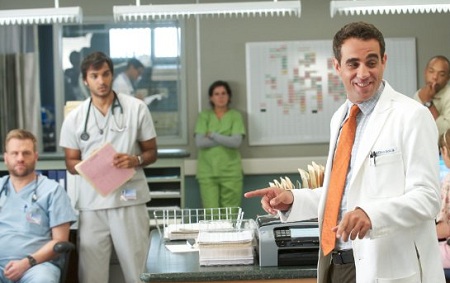
Last night I caught an episode of Nurse Jackie.  Paramedics quickly wheel a pregnant woman into the ER.  Dr Cruz, the newest member of the team who also happens to be in charge of everyone, tells a very pregnant Dr. O’Hara to step aside so he can take control.  It’s clear to viewers that Dr Cruz has falsely assumed he needs to protect a very pregnant, and therefore very weak, Dr. Ohara from an emotionally trying situation.   Continue reading

Daring to Fault the Bully Label: Making WHAT KILLED KEVIN

[This article was published in May 2012. See our recent posts below]

Two weeks ago,  the Washington Post published an article, “Documentary faults ‘bully’ label in U-Va. suicide,” about my film, WHAT KILLED KEVIN.   Shortly after the reporter amended the actual article to include allegations from Waldo Jaquith, who is featured in the documentary, that I had “cherry picked” my interview with him to fit my “agenda.”   [Note: Jaquith has never seen the film and you can see his video clip and my agenda below]  In an unusual move the editors of the Washington Post have since removed all of his allegations and restored the article to its original form with a notice at the top apologizing for their editorial “lapse.”   Why the controversy?  My film dares to take a neutral stance in exploring the incident that put the term “workplace bullying” on the map by allowing the alleged bully to tell their side of the story.  Within weeks of Kevin Morrissey’s suicide, Waldo was featured in a report by the Today Show that linked Kevin’s death to actions by his “bully boss,” Ted Genoways.  As the WaPo states: “eventually the case was embraced as a textbook example of a manager’s verbal and psychological abuse of an employee.  That reading is far too simple, argues Beverly PetersonThe film ultimately portrays Genoways as a victim — of overhyped reporting, and of exploitation by advocates of workplace-bullying legislation, who have used the case as a national exemplar.  

Continue reading

Documentary about VQR suicide reveals a cautionary tale

Nearly two years after the managing editor of the Virginia Quarterly Review killed himself following complaints he made about his boss, Ted Genoways, Mr. Genoways has announced that he is stepping down as editor of the award-winning literary journal. – [Chronicle of Higher Education, April 4, 2012 Robin Wilson]

This weekend I finally finished editing the long version of my documentary about the aftermath of Kevin’s suicide.  It’s a revealing portrait of today’s workplace bullying movement, the lack of depth in media coverage about the topic, and a cautionary tale about the complexity of our office relationships.

The final film (hat tip consulting editor Pam Arnold) is exactly what I promised everyone who agreed to take part – a chance  to tell the story from their individual perspectives.   And, for the first time the POV of the alleged bully is included.  The result underscores the urgent need to embrace new approaches to this topic.   The long awaited web version has taken an exciting turn and will soon enter the web design and coding phase that will make it a truly interactive experience.  Now it’s time to turn to the interactive version.

Take the interactive experience now or you can purchase an educational DVD for a presentation 

Cultural differences in workplaces…

I was up early this morning using the web to research a topic when I happened to find this Korean article advising Korean workers how to understand the style of their Americans and Europeans  co-workers.   I met a Korean workplace bullying expert/researcher while I was filming at the 2008 International Conference on Workplace Bullying & Harassment.  She said that they were having difficulty developing a way to gauge harassment because the cultural differences were so great.  This article gives some insight into what she meant…  Continue reading