
What is the role of the press and advocates when a family links suicide to workplace bullying?

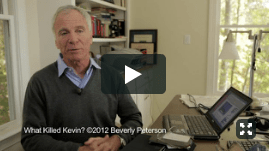
Screen Shot 2012-12-02 at 10.27.20 AMThis week Eyewitness News 4 (NBC) broke a story about a family who claims a Santa Fe suicide is the result of workplace bullying. I’m not writing about whether that claim is true or not –  both sides haven’t been heard yet and none of us know. This is about how the media and advocates often frame these stories. In 2010, I interviewed Ed Wasserman about the way journalists cover suicide for my documentary, What Killed Kevin? which is about the tragic suicide of Kevin Morrissey. Kevin’s death turned out to be the pivotal event that turned workplace bullying into a ‘hot topic.’ Wasserman is the John S. and James L. Knight Foundation professor of journalism ethics at Washington and Lee University and he addressed this case in his bi-weekly column for the Miami Herald.

Screen Shot 2012-12-02 at 10.29.53 AM

The Workplace Bullying Institute’s blog blasted Wasserman accusing him of “trivializing” Morrissey’s suicide and that “Wasserman’s denial of the reality that bullying could drive a person to suicide seems indefensible.”  But, Wasserman says he never denied that a person could be driven to suicide — he was questioning the link in this situation and the rush to coverage by the media.  These interviews show that, far from trivializing workplace bullying, Wasserman takes the topic very seriously and feels the media doesn’t dig into the story deeply enough.  He argues that the way the story is framed by the media hurts the possibility of a real dialog that would help bring about change.  Watch these two clips and decide for yourself.

(Note: the interactive web version of this documentary will soon be available to the public and allow site visitors to hunt through the interviews and clues to decide for themselves, What Killed Kevin? and join the dialog about how best to prevent and address workplace bullying.)

Will Supreme Court strengthen or weaken harassment protections?

We’re in a university setting here, so let me give you a university hypo. There’s a professor, and the professor has a secretary. And the professor subjects that secretary to living hell, complete hostile work environment on the basis of sex, all right? But the professor has absolutely no authority to fire the secretary. What would the Seventh Circuit say about that situation? [Supreme Court Justice Elena Kagan]

Would the Professor be considered the Secretary‘s supervisor in an harassment case — making the employer liable for his actions? I’ll give you the short answer offered up by the Obama Administration’s Deputy Solictor General Srikanth “Sri” Srinivasan — NO. Today’s Supreme Court hearing on Vance v. Ball State featured intense questioning from the justices.  Vance’s attorney, Daniel Ortiz, argued “as Justice Kagan’s question revealed, it produces truly perverse results. Someone who can tell you what to do in your job day-to-day, manage you during the whole job period, what kind of tasks you have to do, was not necessarily considered a supervisor, while the person upstairs in human resources that you may never see or even know would be considered your supervisor.” Continue reading

Are Companies Liable When Supervisors Harass Employees? Ask the Supreme Court

Maetta Vance was working at Ball State University when she was harassed by another employee who Vance alleged had the authority to tell her what to do and how to clock her hours. After filing repeated complaints, Vance sued the university for violating Title VII. The university argued that it could not be held liable because Vance’s harasser did not have the power to hire, fire, demote, promote, transfer or discipline her. Lower courts agreed. Vance appealed to the Supreme Court. [ Announcement of Friend of Court Brief filed by National Partnership For Women & Families ]

So, the question before the Supreme Court this Monday is whether or not the definition of supervisor in harassment cases should be limited to only those managers with the authority to hire and fire or discipline an employee.  According to Sarah Crawford, the director of Workplace Fairness, “the Court’s decision will have important ramifications for the ability of victims of supervisor harassment to hold their employers accountable…The case is a chance for the Court to affirm a standard that furthers the purposes of Title VII – to root out harassment and make clear that employers will be held accountable when supervisors violate the law. A contrary ruling will have grave consequences for victims of harassment and the rights guaranteed by our nation’s equal employment opportunity laws. ” Continue reading

Black Thursday? Or, Black Friday? Will Walmart’s employee strike work?

It all depends on shoppers.  Walmart wants to bring people in before the stirke — and ABC’s Good Morning America glibly helps them make their case:

$155 Million Workplace Defamation Award Overturned

Too many victims of bullying and harassment have seen their reputations torn to shreds as they struggle to heal and find new employment.  In 2010 Dr. Katherine Murphy lost sexual harassment and retaliation claims against the Aventura City charter school she helped found and Aventura City Manager Eric Soroka.  Later an Appeals Court upheld the verdict stating she was unable to prove a hostile work environment and, based on the testimony of co-workers, Soroka did not “single out females as targets for the profanity”:

Murphy testified that she asked Soroka to stop bullying her and that she complained to a former supervisor, Soroka’s assistant, and a city commissioner that Soroka had used “vulgar, inappropriate language,” and engaged in “bullying, yelling, [and] screaming.” Murphy failed to report Soroka’s conduct, formally or informally, to her employer, and Murphy acknowledged that she did not complain to Soroka’s assistant or the city commissioner that Soroka’s conduct was sexually hostile or sexually harassing. The district court correctly entered summary judgment against Murphy’s complaint of retaliation.

Fast forward two years to November 2012.  Murphy wins a whopping $155 million for defamation, conspiracy, and intentional infliction of emotional distressThe Miami Herald reports that: Continue reading

Managing your boss

reprinted from the American Psychological Association Help Center

Q.How do you manage the prototypical “difficult boss?”

A. Successfully managing a difficult boss is a challenge but often feasible. First, you should try to understand the reasons for your boss’ difficult behavior. Assuming your boss generally behaves in a fairly reasonable manner, and that his/her difficult behavior seems to be a result of stress overload rather than his/her character, chances are good that the behavior can be modified. If your boss’ behavior seems to reflect a chronically hostile, abusive style of interacting regardless of the amount of stress in the worksite, the chances are less positive that the behavior can change. In fact, you may want to consider seeking counsel from a trusted mentor or human resources professional to evaluate your options. Continue reading